Beginner’s Guide to Jigging: Choosing the Right Jig, Depth & Technique
Jigging is one of the most effective and exciting saltwater fishing techniques for targeting aggressive predatory fish. Whether you’re fishing inshore reefs, offshore drop-offs, or deep-water structures, choosing the right jig weight and jigging style can make all the difference.
If you’re new to jigging, this guide will help you understand the basics of jig selection, water depth, and jigging techniques so you can start catching more fish.
What is Jigging?
Jigging is a fishing technique where a metal lure (jig) is dropped into the water and worked vertically to imitate injured baitfish.
The action of the jig attracts predatory fish, triggering aggressive strikes.
There are two major jigging styles:
- Slow Pitch Jigging (Slow Fall)
- Fast Fall Jigging (Fast Sinking)
Each technique works differently depending on water depth, current, and target species.
Choosing the Right Jig Weight Based on Water Depth
A simple beginner formula:
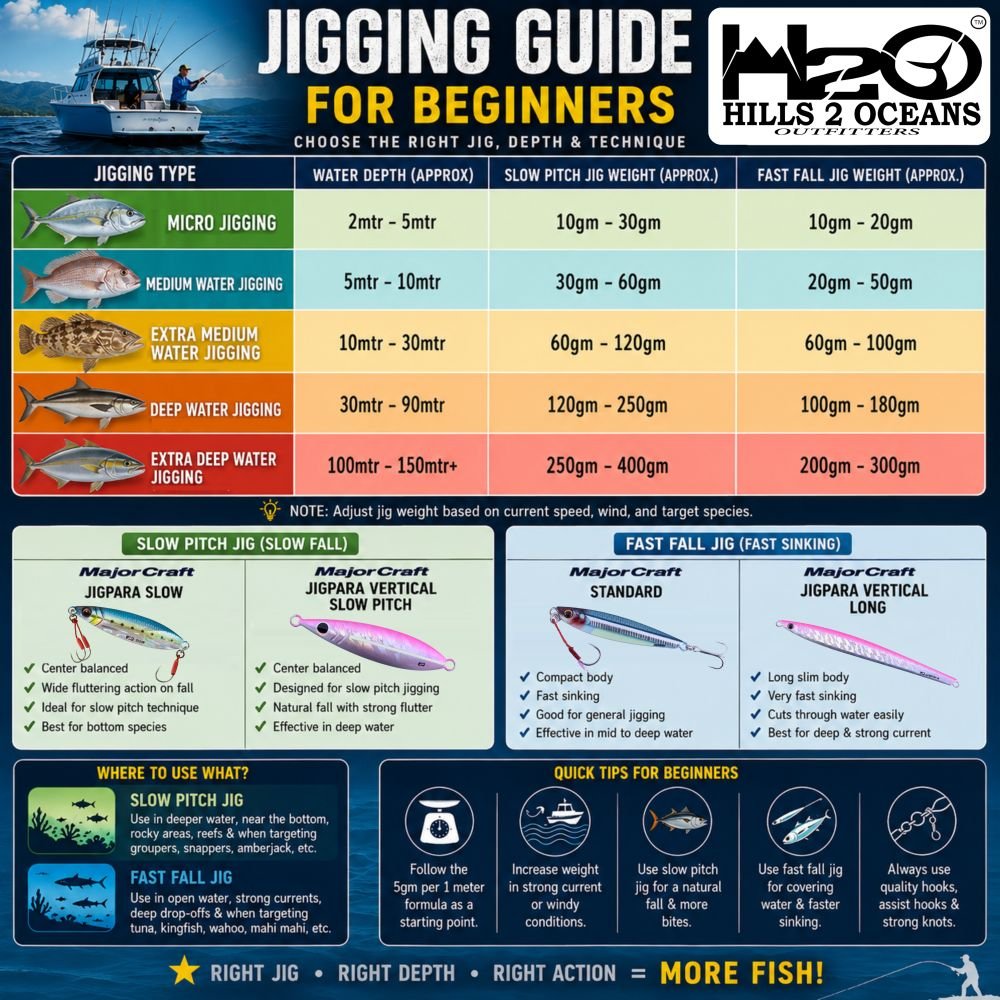
Start with 5 grams per meter of water depth
This gives you a strong starting point and can be adjusted depending on current and wind.
1. Micro Jigging (2m – 5m)
Slow Pitch Jig Weight: 10g – 30g
Fast Fall Jig Weight: 10g – 20g
Best for shallow water structure, rock edges, and reef flats.
Target species:
- Small Trevally
- Barramundi
- Snappers (Mangrove Jack)
- Barracuda
Best option:
- Light jigs with natural flutter
2. Medium Water Jigging (5m – 10m)
Slow Pitch Jig Weight: 30g – 60g
Fast Fall Jig Weight: 20g – 50g
Ideal for inshore reefs and light offshore fishing.
Target species:
- Fingermark snapper
- Grouper
- Barramundi
- Triple tail
Focus on:
- Controlled jig action
- Natural fall presentation
3. Extra Medium Water Jigging (10m – 30m)
Slow Pitch Jig Weight: 60g – 120g
Fast Fall Jig Weight: 60g – 100g
Perfect for reef edges and deeper structures.
Target species:
- Grouper
- Stingray (Foul Hook)
- Barracuda
- Bonito
- Tuna
Key tip:
Use heavier jigs if current increases.
4. Deep Water Jigging (30m – 90m)
Slow Pitch Jig Weight: 120g – 250g
Fast Fall Jig Weight: 100g – 180g
This is where serious offshore jigging begins.
Target species:
- Cobia
- Amberjack
- Sharks
Best for:
- Drop-offs
- Offshore reefs
- Deep wrecks
5. Extra Deep Water Jigging (100m+)
Slow Pitch Jig Weight: 250g – 400g
Fast Fall Jig Weight: 200g – 300g
Heavy-duty setup required.
Target species:
- Amberjack
- Dog tooth Tuna
- Tuna (Family)
Important:
Current speed matters more than depth here.
Understanding Slow Pitch Jigging
Slow pitch jigging is designed to create a fluttering fall action.
Best used for:
- Bottom species
- Reef predators
- Structure fishing
Works well for:
- Grouper
- Snapper
- Amberjack
Recommended jigs:
- Major Craft Jigpara Slow
- Major Craft Jigpara Vertical Slow Pitch
Advantages of Slow Pitch Jigging
✔ Natural falling action
✔ More bite opportunities
✔ Great for bottom dwellers
✔ Less angler fatigue
Understanding Fast Fall Jigging
Fast fall jigs sink quickly and cover water efficiently.
Best used for:
- Open water
- Strong currents
- Fast-moving pelagics
Works well for:
- Tuna
- Kingfish
- Wahoo
- Mahi Mahi
Recommended jigs:
- Major Craft Standard
- Major Craft Jigpara Vertical Long
Advantages of Fast Fall Jigging
✔ Faster sinking
✔ Covers more water
✔ Better in current
✔ Great for aggressive fish
Where to Use Slow Pitch vs Fast Fall Jigs
Use Slow Pitch Jigs When:
- Fishing near the bottom
- Around reefs and rocks
- Targeting structure species
- Fish are less aggressive
Use Fast Fall Jigs When:
- Fishing open water
- Covering deeper water quickly
- Current is strong
- Targeting pelagic species
Beginner Jigging Tips
1. Match jig weight to depth
Use the 5g per meter rule as your starting point.
2. Adjust for current
Stronger current = heavier jig.
3. Watch your line angle
A straight vertical presentation is more effective.
4. Use quality assist hooks
Strong hooks increase landing rate.
5. Learn the fall bite
Many strikes happen during the jig’s fall.
Common Beginner Mistakes in Jigging
- Using jigs that are too light
- Jigging too fast all the time
- Ignoring current and drift
- Not checking hook sharpness
- Using the wrong rod action
Final Thoughts
Jigging doesn’t have to be complicated.
Start simple:
Choose the right depth, match the jig weight, and pick the right jigging style.
As you gain experience, you’ll quickly understand how fish react and what adjustments to make.
The right jig, right depth, and right action will always improve your chances of landing more fish.
Explore premium jigging gear at Hills 2 Oceans | Jigging Section.